

Did you know that Athletes foot is one of the most common skin conditions affecting millions of feet around the world.
Tinea Pedis aka Athletes foot is a fungal infection caused by the Trychophyton Rubrum fungus. Its favourite place to grow is dark, warm areas such as shoes. It can affect both nails and feet as it is highly contagious. Fungus on the toenails, known as onychomycosis can become a stubborn condition if not treated from the first signs of infection.
Signs of fungal nail infection
Thickened, yellow, or discoloured nail plate: One of the first signs of a fungal infection is a change in the nail’s appearance.
Debris under the nail: A build-up of skin and fungal particles under the nail, giving it a crumbly texture.
Crumbly or brittle nails: The nail may become fragile, breaking or crumbling easily.
Unpleasant odour: Fungal infections often cause a distinctive smell that can indicate the presence of an infection. What causes a fungal nail infection?
Moisture: Damp environments, such as sweaty shoes and socks, create ideal conditions for fungus to thrive. Walking barefoot: Using public spaces like swimming pools, gyms, and communal showers can expose your feet to fungal spores.
Injury to the nail: Trauma to the nail can create an entry point for the fungus.
Underlying health conditions: People with diabetes or weakened immune systems are more susceptible to fungal infections.
What is Lunula Laser and how does it work?
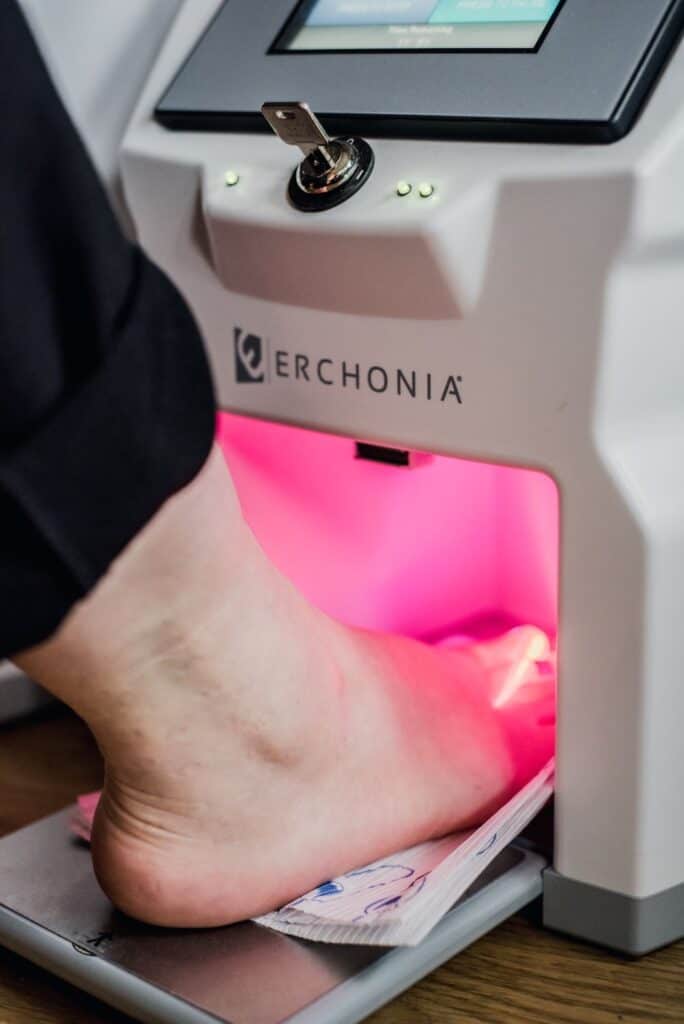
Lunula is a non-thermal laser, which attacks specific cells within a fungus to kill it off. It uses a self-operated, non-contact device to deliver the treatment safely and effectively, with no adverse effects or the need to take time off post-treatment.
When activated, the Lunula Laser device causes the two light beams to rotate.
The violet beam is antimicrobial, and its function is to target the Mitochondria to trigger a reaction called oxidative stress. When in contact with the infected toenail, it activates a photochemical response producing Reactive Oxygen Species chemicals (specifically Hydrogen Peroxide), which causes damage to the Mitochondrial and fungal cell membrane. These chemicals are then converted to Hydrogen Peroxide, a natural antiseptic, which kills off the fungus that lives in and under the nail, causing irreversible cell damage.
The red beam then works in conjunction with the violet beam by activating another photochemical reaction, which dilates localised blood vessels. This brings the blood supply down to the area, triggering the body’s natural immune response to release white blood cells to help fight the infection. The body will now start to regenerate new tissue, promoting the toenail’s growth.
What makes Lunula Laser different to other laser treatments?
Lunula is a cold laser, meaning it doesn’t give out heat, which makes it painless. The laser has been developed using the principles of photochemistry, a process that uses the cells in your body to produce different types of chemicals, which attack and break through the spores of the fungus.
Living cells require chemical energy to perform some of their vital functions and ultimately survive. This is why the body stores molecules like carbohydrates, such as glycogen and fats, to have a well-stocked supply of chemical energy. When the cell requires energy, this energy is converted from storage molecules into Adenosine Triphosphate (ATP). ATP then serves as a shuttle, delivering energy to places within the cell where energy-consuming activities are taking place.
Mitochondria convert the chemical energy from food into a form of energy that can be used by the cell to fuel its processes and survive. Mitochondria produce about 90% of the energy that cells need to function. Without Mitochondria, energy cannot be converted to power the cells, leading to worn-down, malfuctioning cells. Lunula Laser, therefore, has been designed to target the Mitochondria in the fungal cell, eliminating its capacity to release and convert the energy the cell needs to survive. The laser light passes through the infected nail without causing damage to it or the surrounding skin, attacking the fungus that lives in and under the toenail. Remember, fungal nail conditions are very unlikely to disappear when treated with over-the-counter creams and lacquers. Nail fungus is a stubborn condition which spreads; hence, it is best treated by a professional.
Why chose Lunula Laser?
Non-thermal: Unlike other laser treatments, Lunula Laser does not use heat, so there’s no risk of burns or discomfort.
No downtime: You can resume normal activities immediately after the procedure.
High success rate: When combined with proper foot hygiene and the use of antimicrobial sprays, Lunula Laser has an impressive 86% success rate.
Lunula Laser is offered as a package of care for both the hands and feet which include 4 sessions (usually 8-10 weeks apart) and a review appointment 3 months post last laser session. With the use of antimicrobial and disinfectant sprays for the skin/shoes, the treatment has an incredible 86% success rate.
You can help treat and reduce the risk of developing nail fungus by:
1. Keeping good foot hygiene, washing your feet and drying them thoroughly daily.
2. Wearing clean socks. The choice of material we prefer is either bamboo or hemp, as these materials are naturally anti-microbial.
3. Wear breathable shoes every day. Ideally, not to wear the same shoes consistently day in day out, as they remain damp which is ideal for fungus to thrive. Have at least four pairs on the go.
4. Do not share towels, nail clippers or scissors with other people.
5. Wearing flip flops or swimming shoes in communal showers or changing rooms.
6. Consistent and regular treatment of athlete’s foot for 4-6 weeks (if you have this).
7. Using shoe hygiene spray daily.
8. Letting your feet air as much as possible when indoors.
9. Fungal nails spread amongst families / households, check others feet whom you live with, as you do not want to be re-infected with the infection.
10. Shoes that are too small or narrow also pinch on the nail and cause repetitive trauma, making the nails more susceptible to fungal invasion.
If you have exercised all home treatments and are still suffering, we recommend seeking professional help. Book an appointment today or give us a call to find out more on how we can help you.