
A healthy body should be free of pain, regardless of your age. Experiencing pain or discomfort in your back, feet, knees or hips when walking, standing or performing any activity you love, can be a sign of abnormalities in your gait or biomechanical structure.
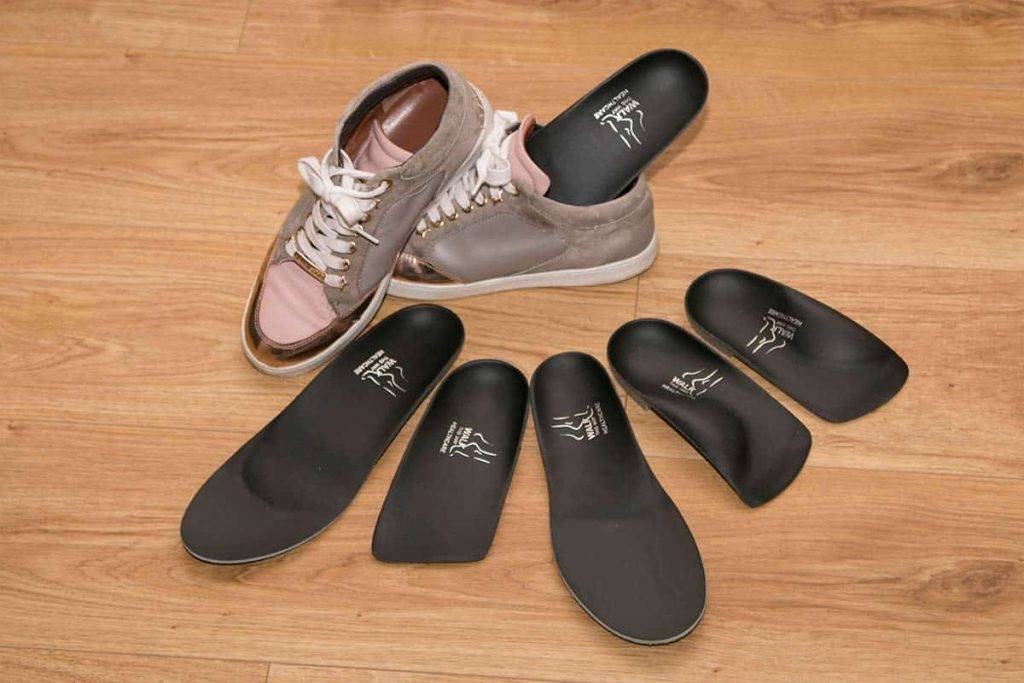
Foot orthotics are designed to help you correct these imbalances by altering the way your feet hit the ground. Orthotic insoles work to balance out the natural position of your foot, enabling it to function as ‘normally’ as possible while eliminating compensation for any abnormality. Wearing foot orthotic insoles changes and redistributes the plantar pressures under your feet, helping reduce internal and external forces acting on specific parts of the foot to treat an injury, reduce foot pain and minimise the appearance of corns and calluses.
When to wear orthotics
Your feet play a crucial role in supporting your body’s weight and keeping you mobile, enabling your ability to stand, walk and run with an upright posture.
When you walk or run, your body goes through a mechanical set of steps that makes movement seem smooth and easy. However, it’s actually a complex process called the gait cycle. Your gait follows a movement pattern that’s unique to you, affecting the way your body moves as a whole.
Most people will develop their unique movement patterns to compensate for areas where they lack peak muscle efficiency. Unfortunately, these compensations may lead to strength imbalances around the joints and ultimately to an abnormal gait pattern.
If your gait isn’t quite right, you can end up experiencing discomfort in your lower body. Gait abnormalities are a sign that you may need foot orthoses.
Custom foot orthotics provide your feet with the type of support needed to correct an abnormal gait pattern. Pain in your lower back, hips, knees or feet is the most obvious sign that you may suffer from a biomechanical imbalance.
Callouses, bunions and hammertoes can also indicate that you have flat feet or fallen arches. In these cases, you can wear foot orthotics to help realign the joints in your feet to ease the pressure caused by the arches not working correctly.
In addition, if you start to see an irregular wearing pattern in your shoes, i.e. one side has more worn down threads than the other, this irregularity can be a sign that you pronate (walk or run with most of the weight on the inside edge of the feet) or supinate (walk or run with most of the weight on the outside of the feet.) Both conditions can lead to long term foot and back problems.
An injury in your lower body could also affect your gait by placing unnecessary strain on unaffected areas. If you have injured yourself, you may want to have a gait analysis to determine if you have developed any biomechanical abnormalities post-accident.
Finally, if you put a lot of strain on your feet, i.e. you have the type of job that demands you to be on your feet, or you play sport for an extended period of time daily — you may want to consider custom foot orthotics to give extra support to your feet, relieving them from the stress and potential pain.
Which orthotic is best for you?
The type of foot orthoses you need will vary depending on your condition and problems that need correcting.
2. Soft or accommodative orthotics are made from softer compression materials such as foam and silicone. This type of orthotic insoles is designed to act as a shock absorber, cushioning the foot to take the pressure off uncomfortable or sore spots and create balance from conditions such as plantar fasciitis or diabetic foot ulcers. They are very lightweight and are often given to people with arthritis and diabetes.
3. Semi-rigid or therapeutic orthotics sit in the middle. Made from a combination of leather and cork layers, they’re used to improve balance and are typically prescribed to people who play a lot of sports.
Ignoring any pain in your lower back, hips, knees and feet not only can exacerbate whatever problem there is but also stop you from doing the things you love most. What’s more, they can help you prevent future conditions that can develop due to your work or lifestyle choices.
If you think you’ll benefit from wearing orthotic insoles, book an appointment for a biomechanics assessment and a gait analysis.